



A paradigm shift is occurring in education that recognizes that wellbeing and academic achievement are intrinsically woven together rather than competing priorities. Research is clear that happy students learn more, are more motivated in school, can remember more and are more creative. In other words, when the brain is in a positive state, its capacity for executive function, memory retention, and creative problem-solving improves significantly. Happy students perform better and it is believed that happiness and learning go hand in hand. This phenomenon is explained by Dr. Barbara Fredrickson’s “Broaden-and-Build Theory” of positive emotions.
Fostering happiness is less about superficial fun and more about creating deep engagement, psychological safety, and a sense of purpose. The question for modern educators is no longer whether we should prioritize student happiness, but how we systematically engineer it into the daily life of our schools.
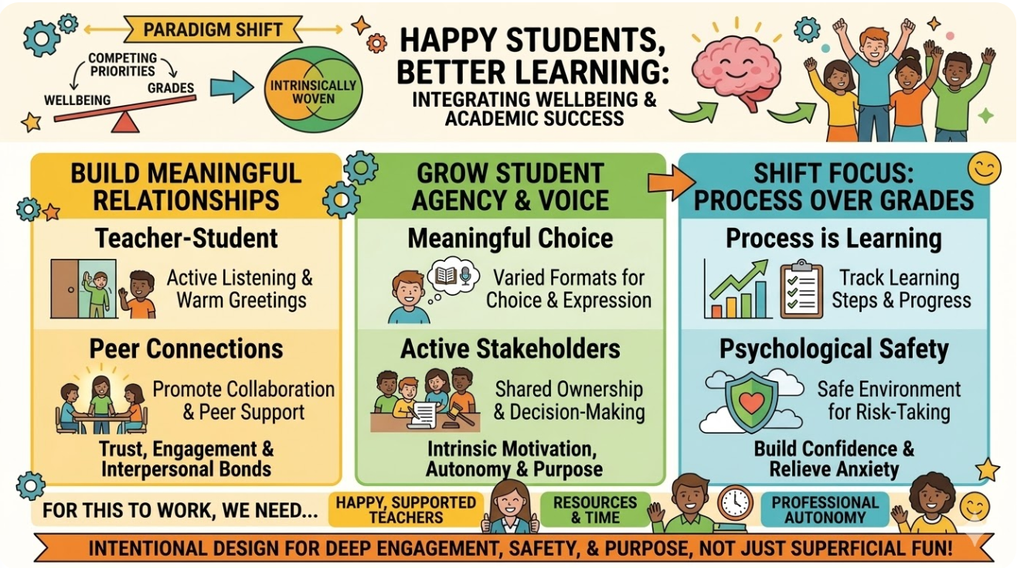
Tips for fostering happiness:
- Happiness begins with relationships where students feel seen, valued and connected. The teacher-student relationship is the strongest predictor of student engagement. Simple practices like greeting students at the door, taking an interest in their lives outside of school, and active listening build a foundation of trust.
- Look for ways to encourage peer connections. Design collaborative learning experiences. For example, use structured group work, peer mentoring, and community-building circles to help students develop strong interpersonal relationships.
- Since we know that a primary driver of intrinsic motivation and happiness is a sense of agency, look for ways to grow this. Offer meaningful choices when you can. For example, allow students to choose how they demonstrate their understanding (e.g., writing an essay, recording a podcast, or building a model) or let them select reading materials that align with their interests, when possible.
- Give students a voice in co-creating classroom norms or selecting project topics. This transforms them from passive recipients of information into active stakeholders in their education.
- Shift the classroom focus from grades to the actual process of learning which can relieve anxiety and build confidence.
- Create a psychologically safe environment where mistakes are openly celebrated as necessary steppingstones to understanding.
Implementing these strategies doesn’t require abandoning academic rigor; rather, it creates the optimal conditions for that rigor to succeed. To have happy students, schools must have happy, supported teachers and this takes resources, time and professional autonomy to thrive.
In summary, fostering happiness requires moving beyond superficial fun and intentionally designing learning experiences and environments that cultivate autonomy, relational trust, and a genuine sense of purpose.